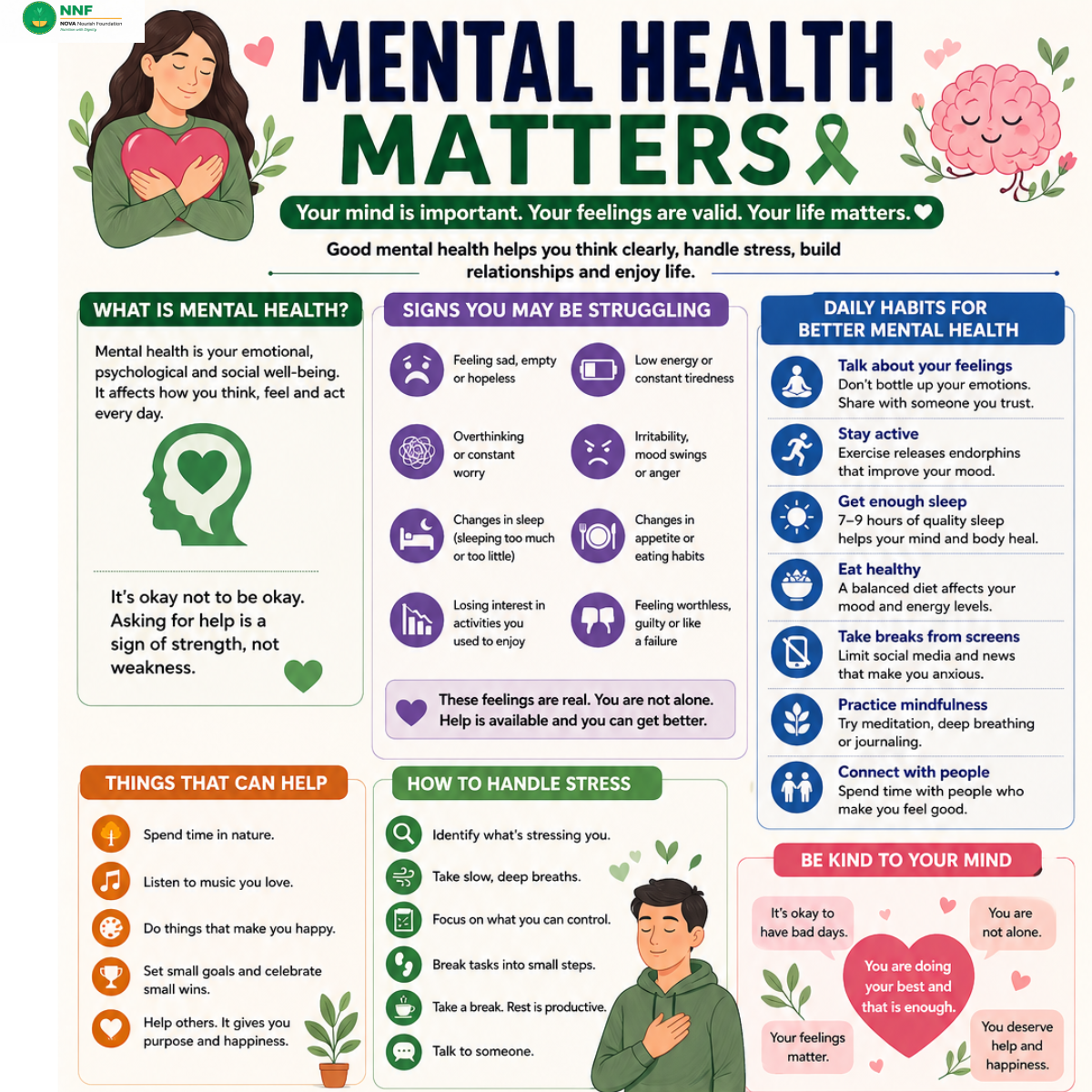
What Is Mental Health?
Mental health is your emotional, psychological, and social well-being. It affects how you think, feel, and act every day. It also influences how you handle stress, relate to others, and make choices. Poor mental health — if left unaddressed — can impact your physical health, relationships, work, and quality of life.
"It's okay not to be okay. Asking for help is a sign of strength, not weakness."
Signs You May Be Struggling
These feelings are real and valid. You are not alone. Help is available:
- Feeling sad, empty, or hopeless for long periods
- Low energy or constant tiredness despite resting
- Overthinking or constant worry about the future
- Irritability, mood swings, or sudden anger
- Changes in sleep — sleeping too much or too little
- Changes in appetite or eating habits
- Losing interest in activities you used to enjoy
- Feeling worthless, guilty, or like a failure
Daily Habits for Better Mental Health
1. Talk About Your Feelings
Don't bottle up your emotions. Share what you're feeling with someone you trust — a friend, family member, or counselor. Talking helps process emotions and reduces the weight you carry alone.
2. Stay Physically Active
Exercise releases endorphins — natural mood-boosting chemicals in your brain. Even a 20–30 minute walk every day can significantly reduce anxiety and depression symptoms.
3. Get Enough Sleep
7–9 hours of quality sleep helps your mind and body heal. Poor sleep worsens anxiety, depression, and emotional regulation. Establish a consistent sleep routine.
4. Eat a Healthy, Balanced Diet
A nutritious diet directly affects your mood and energy levels. Foods rich in omega-3 fatty acids (fish, walnuts, flaxseeds), complex carbohydrates, protein, and vitamins support brain chemistry and reduce anxiety.
5. Limit Screen Time
Reduce time spent on social media that makes you feel anxious, inadequate, or sad. Follow accounts that inspire you and take regular breaks from all screens.
6. Practice Mindfulness
Mindfulness, meditation, deep breathing, or journaling help you stay present and manage overwhelming thoughts. Even 5–10 minutes daily can make a significant difference.
7. Connect With People
Spend quality time with people who make you feel good. Social connection is one of the strongest protective factors for mental health.
How to Handle Stress
Practical Stress Management Steps
- Identify what's stressing you — write it down.
- Take slow, deep breaths. Breathe in for 4 counts, hold for 4, out for 4.
- Focus on what you can control — let go of what you cannot.
- Break big tasks into smaller, manageable steps.
- Take a break. Rest is productive, not lazy.
- Talk to someone you trust — a friend, family member, or professional.
Things That Can Help
- Spending time in nature — a walk in a park or by water
- Listening to music you love
- Doing things that bring you joy — art, cooking, gardening, reading
- Setting small, achievable goals and celebrating small wins
- Helping others — it gives you purpose and creates happiness
Be Kind to Your Mind
Remember:
- It's okay to have bad days.
- You are not alone in your struggles.
- You are doing your best, and that is enough.
- Your feelings matter and are valid.
- You deserve help and happiness.