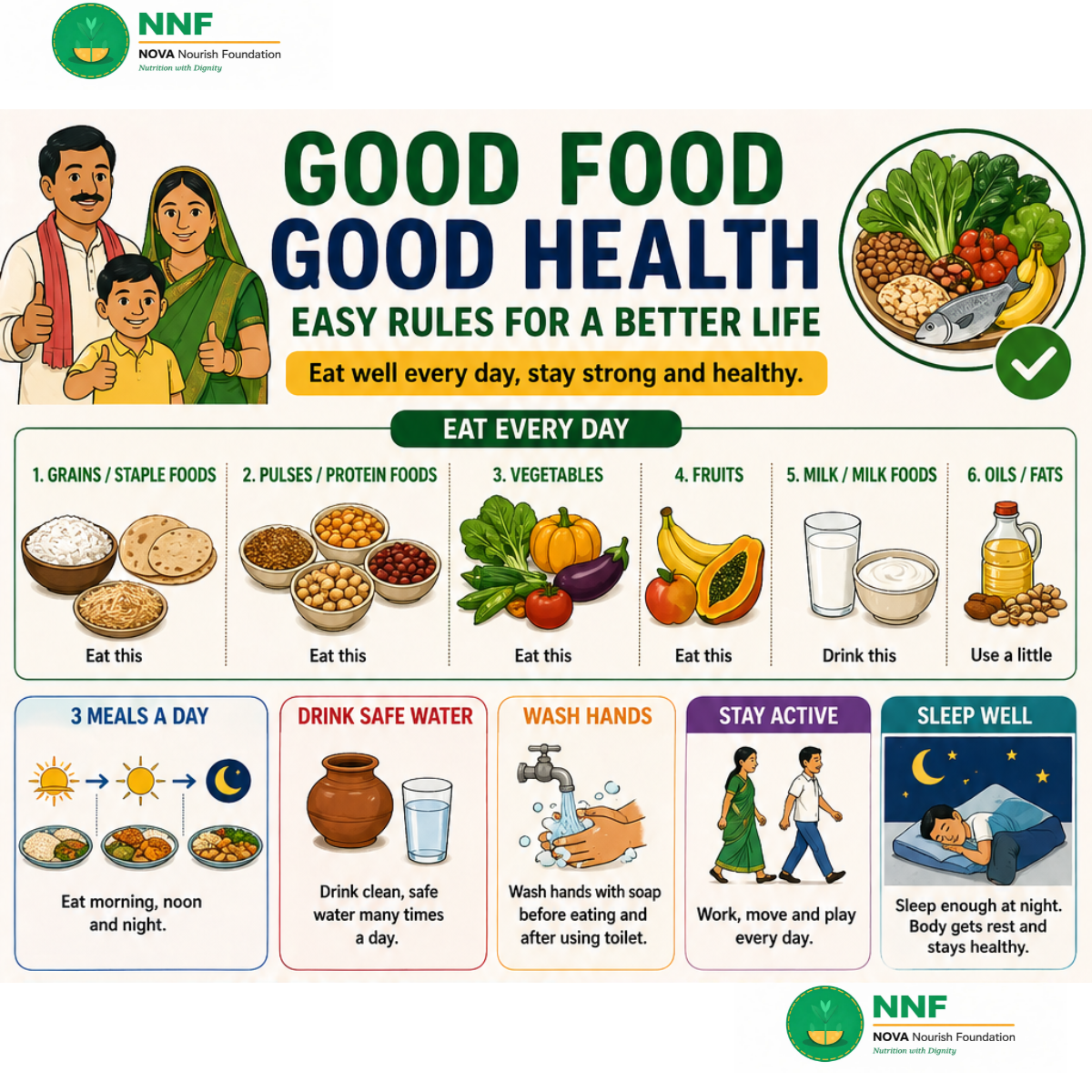
Eat Well Every Day, Stay Strong and Healthy
Good health doesn't require expensive foods or complicated diets. It starts with simple, everyday choices: eating a variety of foods, drinking clean water, staying active, washing hands, and sleeping well. These basics, practised consistently, can dramatically improve the health of your entire family.
What to Eat Every Day
A healthy diet includes foods from all six groups:
- Grains / Staple foods: Rice, roti, bread, oats, noodles. These provide energy to power your day.
- Pulses / Protein foods: Dal, lentils, beans, chickpeas, eggs, fish, meat. These build and repair the body.
- Vegetables: Eat plenty of colorful vegetables — spinach, pumpkin, tomatoes, carrots, beans. Rich in vitamins and minerals.
- Fruits: Bananas, papaya, guava, mango, apple. Eat whatever is local and in season.
- Milk / Dairy: Milk, curd, paneer. Important for calcium and strong bones.
- Oils / Fats: Use a small amount of healthy oils (mustard, sunflower). Avoid excessive fried food.
Five Golden Daily Habits
The Five Pillars of Daily Health
- 3 Meals a Day: Eat morning, noon, and night. Never skip meals — especially breakfast.
- Drink Safe Water: Drink clean, safe water many times a day. At least 6–8 glasses.
- Wash Hands: Always wash hands with soap before eating and after using the toilet.
- Stay Active: Walk, work, play, or exercise every day. Movement is medicine.
- Sleep Well: Sleep enough at night. The body repairs, grows, and recharges during sleep.
Special Nutrition Care for Vulnerable Groups
Children
Children need good food to grow strong, develop their brains, and build immunity. Include protein, calcium, iron, and a variety of vegetables and fruits in their daily diet. Never let a child skip meals.
Pregnant Women
Eat extra nutritious food during pregnancy. Iron (prevents anemia), folic acid (prevents birth defects), calcium, and protein are especially critical. Take care of yourself — the baby depends on you.
Elderly People
Older adults need easy-to-digest, soft, and healthy foods. Focus on calcium (for bones), protein (to prevent muscle loss), and fiber (for digestion). Encourage them to stay physically active within their ability.
Sick People
When sick, eat light, soft, and clean food. Drink plenty of fluids. Maintain proper nutrition to help the body fight illness and recover faster.
Signs That Nutrition May Be Poor
Seek help at a health center if you notice:
- A child or adult appearing very thin or weak
- Swelling on feet or face
- Feeling always tired or dizzy
- Frequent loose motions or digestive problems
Simple, Important Reminders
- Eat a variety of different foods — don't eat the same thing every day.
- Cook at home more often — homemade food is healthier and safer.
- Keep food covered to prevent contamination by insects or dust.
- Keep your home and surroundings clean — cleanliness prevents disease.
- Eat together as a family — it builds bonds and encourages good habits in children.